How to Drive a Golf Cart Safely
Golf carts tip and stop differently from cars, and most of the risk comes from treating them like one.
Slow down before turns and know the cart's limits
A golf cart is safe to drive when you treat it as a low, light vehicle with a high center of gravity and weak brakes compared to a car. That means slowing well before any turn, keeping both hands on the wheel, and never carrying more riders than the cart has seats for.
Most golf cart crashes happen from rollovers on turns taken too fast, or from a rider falling out because they were standing or sitting on the edge. Both are things the driver controls. Where you're allowed to drive one, and whether you need a license at all, depends on your state and sometimes the town or community you're in.
Where you're driving changes what's required of you
Some golf carts stay on private property, like a course or a retirement community. Others are allowed on public streets, usually low speed roads, and those are sometimes called low speed vehicles rather than golf carts once they're registered for the road.
The rules change at that line. A cart used only on a course usually needs no license, no insurance, and no registration. A cart driven on a public street, even a short stretch to cross from one part of a community to another, may need all three depending on the state.
If you're not sure which category your cart and your route fall into, your state's motor vehicle agency can tell you. It's worth checking before you assume a short public crossing is treated the same as the course itself.
If your cart is insured, your policy will usually say where it's covered. Read that part rather than assuming it matches what the state allows.

Age and eyesight matter more on a cart than people expect
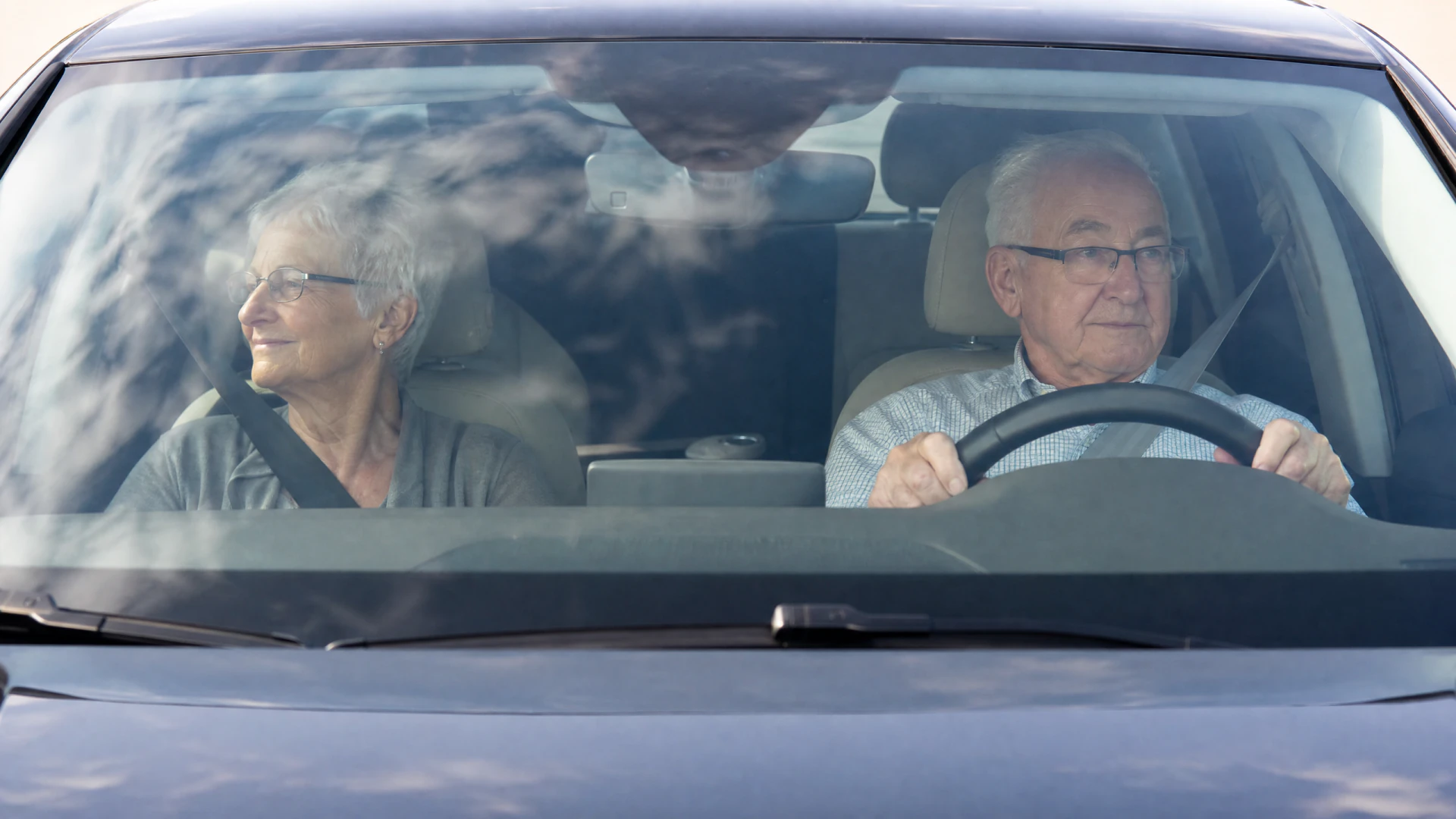
A golf cart has no seatbelts in many models, no airbags, and a body that offers little protection in a collision or a rollover. That makes reaction time and balance more important than they are in a car, where the vehicle itself absorbs some of the risk.
If vision or reaction time has changed, that shows up sooner on a golf cart. There's no crumple zone and no power steering to correct a late turn. Driving slower and giving more distance before braking covers a lot of that gap.
A passenger who can't hold on securely, whether from grip strength or balance, is safer in a seat with a handhold than standing on the back or riding sideways. This matters more on uneven ground, where courses and community paths often are.
If you or a parent are driving a cart regularly, it's worth asking the community or course whether they require or recommend any safety equipment, like a seatbelt retrofit or a speed governor, for older drivers.
Questions people ask about this
Do I need a license to drive a golf cart?
It depends on where you're driving it. On private property, most places don't require one. On public roads, your state may require a regular license or treat the cart as a low speed vehicle with its own registration. Check with your state's motor vehicle agency for the specific rule where you live.
Can a golf cart be insured like a car?
Yes, many insurers offer a policy specifically for golf carts, separate from auto insurance. It typically covers liability, damage to the cart, and sometimes medical costs from an accident. Ask your insurer whether this is a separate policy or an add-on to your homeowners or auto coverage.
What causes most golf cart accidents?
Rollovers from sharp turns taken too fast are one of the most common causes, along with riders falling out because they weren't seated properly. Wet grass, gravel, and slopes make both more likely. Slowing down before a turn, not during it, is the main way to avoid this.
Is a golf cart covered by my homeowners insurance?
Sometimes, but not always, and it depends on your insurer and where the cart is used. Some homeowners policies extend limited liability coverage to a golf cart used on your own property. Ask your insurer directly whether your policy includes this or whether you'd need a separate golf cart policy.
Can an older driver lose the right to drive a golf cart?
This depends on the state and on whether the cart is classified as requiring a license. Where a license is required, the same rules that apply to renewing a driver's license, including any vision or medical review, would apply. Where no license is required, there's typically no formal process to lose that right, though a course or community may set its own policy.
If you're ready to see what a golf cart policy would cost, compare a few quotes side by side.
Check with your state's motor vehicle agency whether your cart needs to be registered or licensed for where you plan to drive it. If it's used on any public road, ask your insurer whether it needs its own policy or can be added to an existing one. Look at the cart itself for a seatbelt or handhold, and don't carry more riders than it has seats for. Before letting a parent or an older family member drive one regularly, have a quick conversation about slowing down earlier on turns, since that's where most harm happens.